Drive two minutes from the gates of Biltmore Forest into Biltmore Village and you would think the same storm hit twice. In the Village, workers spent months lifting a rebuilt Wendy's six feet off its old foundation because the original sat below base flood level. Two minutes away, in Biltmore Forest, nobody talks about water at all.
That split is rooted in the town's own origin story, and it says something about what recovery has actually looked like here for the past two years.
A Founding Story Written in Flood Water
Biltmore Forest exists because of a flood. In July 1916, two storms converged and sent the French Broad River roughly 20 feet above flood stage, devastating Biltmore Village and the Biltmore Estate along with it, and destroying the estate's plant nursery, one of the few parts of the operation that was actually turning a profit at the time. Trustees managing George Vanderbilt's estate after his 1914 death used the financial fallout as a reason to spin off nearly 1,500 acres along Hendersonville Road into a separate residential development. The North Carolina legislature incorporated that development as the Town of Biltmore Forest on February 14, 1923.
The town marked its own hundredth birthday on that same date in 2023, with a residents' art show, a Fourth of July picnic featuring a resident-led band called The SophistiCats, and trolley tours narrated by a volunteer history committee. Today the town covers 2.9 square miles and has an estimated population of 1,343, according to its own government website.
Then Came a Storm That Skipped the Water
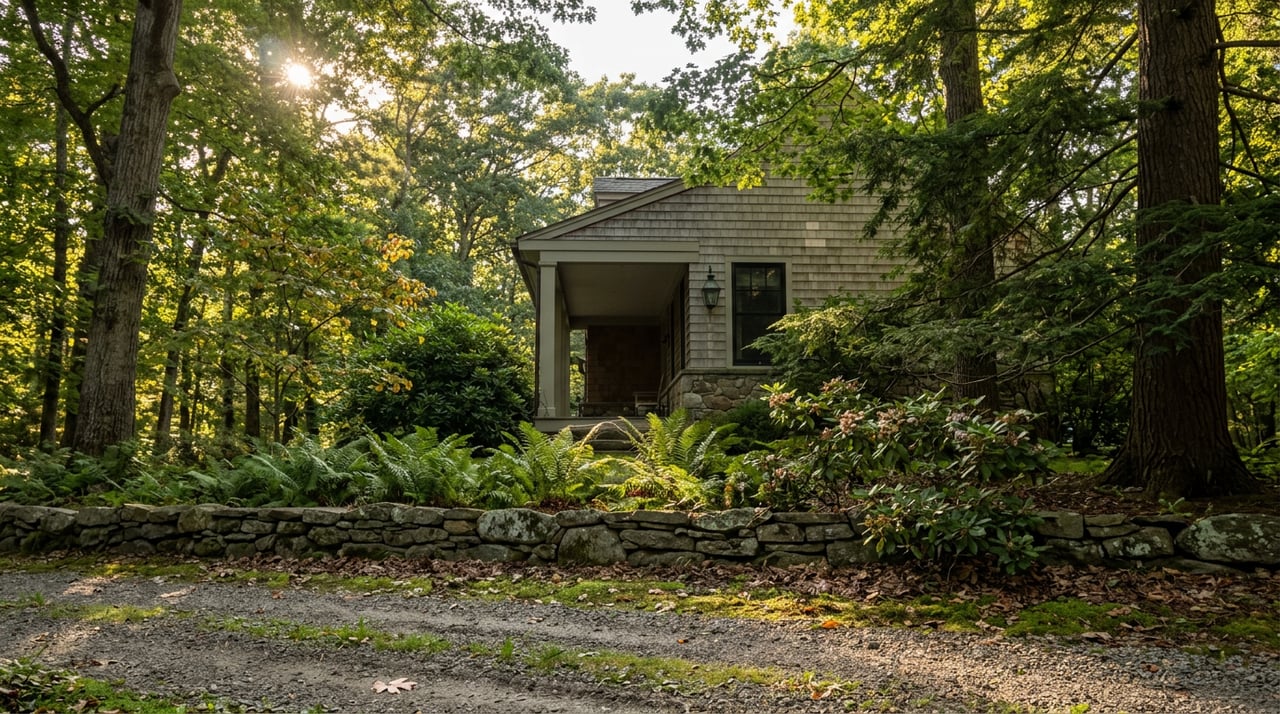
Less than two years after that centennial wrapped, Hurricane Helene moved through Western North Carolina in September 2024. Biltmore Forest avoided the flooding that hit much of the region, a real break given the town's own history with the French Broad. What it lost instead was the canopy that gives the town its name.
Town Manager Jonathan Kanipe told the Asheville Watchdog's Answer Man column that the volume of debris hauled out of Biltmore Forest equaled roughly 31 percent of everything removed across Buncombe County, Asheville, and Black Mountain combined, even though the town covers less than half a percent of that combined land area. A separate accounting put the toll at somewhere between 10,000 and 20,000 downed trees and more than 400,000 cubic yards of debris, described as the equivalent of 25 football fields piled nine feet high.
So the work crews did here was never about pumps or elevation certificates. It was chainsaws, stump grinders, and a long argument over what to plant back.
What Recovery Looks Like Two Years Later
Nearly two years on, that work still shapes the town's calendar. The Tree Committee's Reforest the Forest speaker series has continued at Town Hall, with a July 21, 2026 session from Phyllis Stiles following earlier talks on how Southern Appalachian forests regenerate after disturbance. In February 2026, the town unveiled a black walnut mantel piece handcrafted from a tree that Helene felled, a small, literal example of turning storm debris into something meant to last. Residents have also had chances to join EcoForesters for hands-on workshops on identifying and removing invasive plants around town.
The clearest physical evidence sits inside Brooklawn Park. The town had just finished its first trail there in May 2024, a walking loop through the park's 15 wooded acres, when Helene buried it under fallen hardwoods and pines that same September. Rather than simply clear the old route, the town brought in a trail designer and rebuilt it as a new 1.15-mile loop, using the cleanup as an opening to also pull invasive species and start reforesting with natives along the way.
The parks themselves predate the storm. Biltmore Forest used $451,000 in American Rescue Plan funding after the pandemic to build out Brooklawn and Greenwood Parks in the first place, a decision Kanipe has tied directly to what residents asked for during a year everyone was stuck indoors.
"When COVID hit, everybody was inside. It seemed logical at that point to get people outside."
That same instinct showed up again this past Saturday, August 8, when the town held a Picnic in the Park gathering at Rosebank from 4:30 to 6:30 in the evening, and again in late July, when the Kiwanis Club's annual 5k and 10k wound through the town's residential streets, with early packet pickup at Mountain Running Company downtown and proceeds benefiting the Kiwanis Club of Asheville. Between Rosebank, Greenwood, and the rebuilt Brooklawn loop, the town now has three green spaces doing double duty as both storm recovery projects and the connective tissue of everyday life.
Two Minutes Away, a Different Kind of Comeback
None of this shows up in Biltmore Village, and that is the point. The Village sits along the French Broad River corridor and took on the water Biltmore Forest never saw. Its comeback has been about foundations, not forests.
| Spot | Status | What changed |
|---|---|---|
| Gemelli | Open since its April 17-19, 2026 grand opening weekend | New Italian restaurant from Chef Anthony Cerrato inside the historic 1923 Biltmore Crossing building at 28 Hendersonville Rd |
| Piebird | Expected to open by the end of 2026 | New concept moving into the former TGI Fridays space |
| Wendy's | Targeted for a late June or early July 2026 reopening, a date that has already passed | Rebuilt roughly six feet higher after the original sat below base flood level |
Wendy's flood exposure was specific enough that its franchisee, Tar Heel Capital Corporation, worked with the city and local engineers to raise the new building's elevation before construction even started. That is a fundamentally different repair job than clearing a canopy, and a reminder that recovery has meant something different depending on which side of the Village line a building sits on.
The Village's older standbys never left. Corner Kitchen has been serving out of a Victorian home more than 125 years old, and Burial Beer's Forestry Camp location still pours from more than two dozen taps a short walk from where Gemelli now operates. Between the new arrivals and the ones that held on, the two-minute drive from Biltmore Forest into the Village now has more open kitchens than it did a year ago, even though the two neighborhoods got there by fixing entirely different problems.
One Town, Two Recoveries
The town's own history makes the contrast sharper. Biltmore Forest exists because a flood hit Biltmore Village and the estate in 1916. A century later, almost to the point of irony, the storm that actually tested this generation of the town skipped the water and took the trees instead, while the Village a couple of minutes down the road went through a flood recovery that would have looked familiar to the town's own founders. If you already live in Biltmore Forest, that is likely why the last two years have looked like tree committee meetings and a rebuilt trail loop, while the Village's version of the same stretch has looked like construction fencing and grand openings.
That is worth knowing next time you are deciding between a walk around Brooklawn or dinner two minutes away.
If you are curious about what any of this means for property here, or you are weighing a move into Biltmore Forest or the surrounding Asheville area, Nate Kelly has spent enough time on the ground in Western North Carolina to talk through the details honestly, no pressure attached. Let's Connect.