Looking for an in-town Asheville neighborhood that feels established, residential, and still close to the places you go most? Kenilworth stands out for exactly that reason. If you are comparing central Asheville options, this guide will help you understand the neighborhood’s location, housing character, parks, and what daily life may look like before you decide if it fits your goals. Let’s dive in.
Where Kenilworth Is in Asheville
Kenilworth sits southeast of downtown Asheville between Beaucatcher Mountain and the Swannanoa River. City sources describe it as roughly bounded by Tunnel Road on the east and Biltmore Avenue on the west.
That location places Kenilworth between downtown Asheville, Biltmore Village, and Biltmore Estate. For many buyers, that means you can stay close to major destinations without living right in the busiest part of the city.
Why Buyers Notice Kenilworth
Kenilworth offers a different feel from denser urban areas nearby. City materials describe it as mostly residential, which gives it a quieter, more neighborhood-oriented character than downtown.
If you want central access but prefer a setting with more greenery, curving streets, and a little breathing room, Kenilworth often lands on the short list. It feels in town, but not overly commercial.
Kenilworth’s History Shapes Its Character
Kenilworth dates back to the early 1910s and was annexed by Asheville in 1929. That early development helps explain why the neighborhood feels established rather than recently built.
Historic records describe Kenilworth as Asheville’s “Pioneer Suburb.” The neighborhood developed with large building sites, scenic views, and curving streets, including road patterns that followed the natural terrain rather than a strict grid.
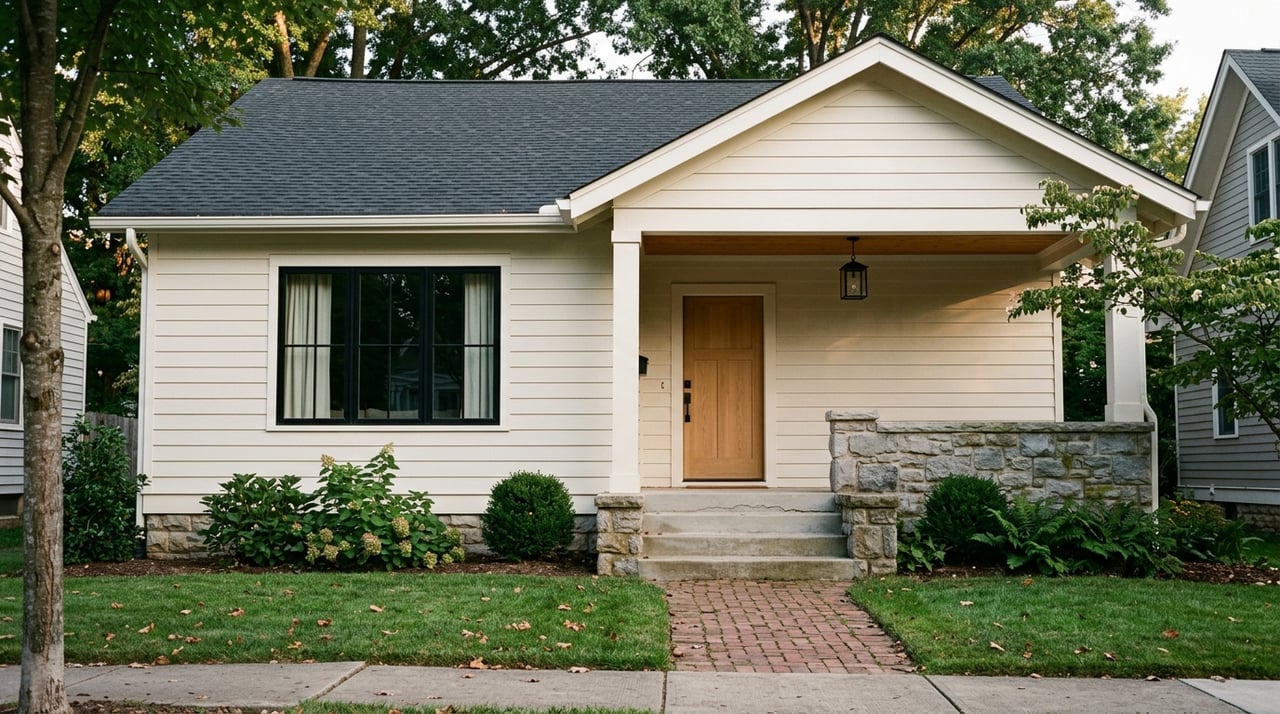
For you as a buyer, that history matters because it often shows up in the overall look and layout. Kenilworth is not a one-style subdivision, and that variety is part of the appeal.
Homes in Kenilworth
Most of the neighborhood’s housing stock reflects early-20th-century development, especially homes from the 1910s and 1920s. Survey records note scattered 1920s-era residential structures throughout the neighborhood, with denser clusters on streets such as Buckingham Court and Warwick Drive.
In practical terms, you should expect older homes with architectural variety rather than rows of similar houses. That can be a great fit if you value character, but it also means each property deserves a close look on its own merits.
Architectural Styles You May See
Kenilworth includes notable early-20th-century styles such as Spanish Colonial Revival and Tudor Revival. Historic records specifically identify several Spanish Colonial Revival homes built in the neighborhood during the 1920s, along with Tudor Revival examples.
That mix gives the neighborhood visual interest. If you enjoy homes with distinct design details instead of a uniform tract-home feel, Kenilworth offers more personality than many newer developments.
Lot and Street Patterns Can Vary
Because Kenilworth grew on hillier ground and developed over time, lot character can shift from one block to the next. Some streets may feel more compact, while others may feel more open or tucked away.
The curving street layout also adds to the neighborhood’s distinct feel. When you tour homes here, it helps to compare more than one section of the neighborhood so you can get a clearer sense of what fits your lifestyle.
Parks and Green Space in Kenilworth
One of Kenilworth’s strongest lifestyle features is its park system. The city highlights five parks in the neighborhood: Kenilworth Park, Leah Chiles Park, Meadow Park, Seven Springs Park, and Forest Park.
For buyers who want easy access to outdoor space, this is a major plus. The parks help reinforce the neighborhood’s more residential, park-oriented identity.
Kenilworth Park
Kenilworth Park includes basketball, pickleball, a playground, restrooms, and tennis. For day-to-day living, that gives you a practical mix of recreation and convenience within the neighborhood.
Leah Chiles Park
Leah Chiles Park includes a playground, half-court basketball, picnic tables and benches, a multi-purpose field or open lawn, and wheelchair access. It adds another useful outdoor gathering space for residents and visitors.
The Kenilworth Trio
Seven Springs Park, Meadow Park, and Forest Park are often grouped together as the Kenilworth Trio. City descriptions emphasize their more naturalized character, including a steep inclined trail crossing a free-flowing creek, large hardwoods, and long field space.
These spaces can give the neighborhood a more tucked-in, leafy feel than buyers may expect this close to central Asheville. Meadow Park also has historical significance as one of the early landmarks seen from Kenilworth’s original entrance off Caledonia Road.
Harvest House Community Center
Another standout amenity in Kenilworth is Harvest House Community Center at 205 Kenilworth Road. The city describes it as a center that specializes in programs for active older adults and offers classes and events.
Amenities include a clay studio, weaving studio, woodworking shop, billiards, shuffleboard, and a multipurpose room. The building itself is also a neighborhood landmark, originally built in 1925 before later becoming a community center.
For buyers, this adds another layer to Kenilworth’s identity. It is not just a place with homes and parks. It also has a long-standing community amenity woven into the neighborhood fabric.
What Daily Life May Feel Like
Kenilworth generally reads as more residential than urban. Based on city descriptions, its parks, and its community-centered amenities, the neighborhood tends to feel quieter and more self-contained than the downtown core.
That does not mean isolated. Its close-in location is still one of its biggest selling points. You are near downtown Asheville and Biltmore-area destinations, but your home base may feel calmer and more tucked away.
The presence of the Kenilworth Residents’ Association also points to a neighborhood with a strong local identity. For many buyers, that sense of place can matter just as much as square footage or finish level.
Getting Around Kenilworth
If walkability is at the top of your list, Kenilworth is worth evaluating carefully. Current third-party mobility data rates the neighborhood as car-dependent, with some transit and somewhat bikeable conditions.
That suggests a car still matters for many daily errands and routines, even though the neighborhood is close to central Asheville destinations. If you are relocating from a larger city or looking for a truly car-light lifestyle, it is smart to calibrate expectations early.
Kenilworth Home Prices and Market Pace
Current third-party housing data places Kenilworth roughly in the high-$400,000s to about $500,000, depending on the source and metric. Redfin reports a May 2026 median sale price of $499,832 and about 50 days on market.
Realtor.com reports a May 2026 median listing price of $460,000, a median sold price of $488,500, and 63 median days on market. Taken together, those numbers suggest an active neighborhood that is not moving at an extreme pace compared with some Asheville segments.
For you as a buyer, that can be helpful. You may still need to move decisively on the right home, but Kenilworth does not necessarily read as the kind of market where every listing disappears instantly.
Who Kenilworth May Fit Best
Kenilworth may be a strong fit if you want:
- An in-town Asheville location with a more residential feel
- Older homes with character and architectural variety
- Access to multiple neighborhood parks
- A setting close to downtown and Biltmore-area destinations
- A neighborhood with established history and identity
It may be less ideal if you want:
- A highly walkable, errand-on-foot lifestyle
- Newer, more uniform housing stock
- A dense urban environment with more day-to-day commercial activity
What to Watch When Buying in Kenilworth
In a neighborhood with older homes and varied lot conditions, details matter. Two homes at similar price points can offer very different layouts, updates, site conditions, and long-term maintenance considerations.
That is where local guidance can make a real difference. A neighborhood like Kenilworth rewards buyers who look beyond listing photos and pay attention to street feel, terrain, home condition, and how each property fits their daily routine.
If you are exploring Kenilworth and want practical, low-pressure help comparing homes and tradeoffs, Nate Kelly can help you make sense of the details and find the right fit for your move.
FAQs
What is Kenilworth like for Asheville homebuyers?
- Kenilworth is a mostly residential Asheville neighborhood southeast of downtown, known for older homes, curving streets, parks, and close-in access to downtown and Biltmore-area destinations.
What types of homes are common in Kenilworth Asheville?
- Buyers will mostly find early-20th-century homes, especially 1920s-era residences, with architectural variety that can include Spanish Colonial Revival and Tudor Revival styles.
Are Kenilworth Asheville home prices expensive?
- Current third-party data places Kenilworth roughly in the high-$400,000s to about $500,000, depending on whether you look at listing or sold-price metrics.
Is Kenilworth Asheville walkable?
- Current third-party mobility data rates Kenilworth as car-dependent, with some transit and somewhat bikeable conditions, so many buyers should expect to rely on a car for daily errands.
What parks are in Kenilworth Asheville?
- The city highlights Kenilworth Park, Leah Chiles Park, Meadow Park, Seven Springs Park, and Forest Park as key neighborhood parks.
What is Harvest House in Kenilworth Asheville?
- Harvest House Community Center is a neighborhood landmark on Kenilworth Road that offers programs for active older adults, along with classes, events, and activity spaces such as studios and workshops.