If you want your first Asheville home to feel connected, practical, and full of character without paying the price you might see in some more central areas, Oakley deserves a close look. For many first-time buyers, the challenge is finding a neighborhood that balances budget, commute convenience, and long-term livability. Oakley often lands in that sweet spot, but it also comes with tradeoffs you should understand before you make a move. Let’s dive in.
Why Oakley stands out
Oakley sits southeast of downtown Asheville, and the City of Asheville describes it as bounded by Sweeten Creek Road, Thompson Street, and I-240. It is a large, established neighborhood with a mix of local amenities, including a library, fire station, police substation, park, baseball complex, churches, and commercial businesses. That combination gives Oakley a lived-in, everyday feel instead of a master-planned look.
For a first-time buyer, that matters. You may want an area that feels part of the city but not as dense as downtown. Oakley can offer that middle ground, with convenient access to daily errands and several parts of Asheville.
Oakley has real Asheville character
Oakley’s history helps explain why it feels different from a newer subdivision. Preservation sources describe it as a historically working-class neighborhood that grew from a series of small developments along Fairview Road. Much of that older housing stock is still there today, which creates a neighborhood with more variation and personality from block to block.
That character is a big draw for many buyers. If you like homes that feel established and unique, Oakley may be more appealing than a neighborhood where every house was built around the same time. You are more likely to see a mix of styles, ages, lot sizes, and levels of updating.
What first-time buyers can expect in Oakley
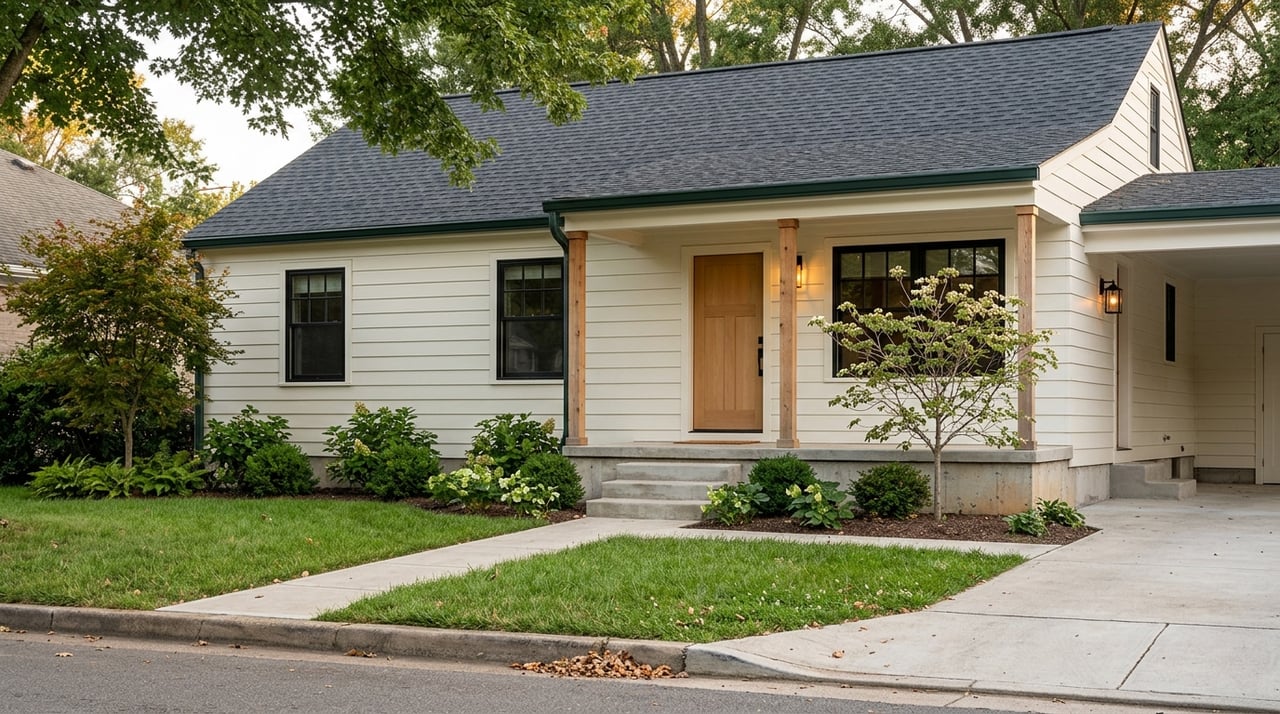
One of Oakley’s biggest strengths is variety. Historic planning in the area leaned toward cottage- and bungalow-style homes, and current listings still reflect that pattern. You can find restored bungalows, older single-family homes, newer Craftsman-style construction, and even land for future building.
That range gives you more than one path into the market. Some buyers want a home with charm that is already updated. Others are open to cosmetic projects or want a property with room to grow over time. Oakley can support both approaches, depending on the block and the home.
Lot sizes vary more than you might expect
Oakley does not have a one-size-fits-all layout. Current listings show lot sizes ranging from smaller in-town parcels of a few thousand square feet to larger sites around a quarter acre, a half acre, or more. In practical terms, one street may feel compact and urban, while another feels more spacious or ripe for infill opportunities.
That is important when you start comparing homes. A listing in Oakley may sound similar on paper to another one nearby, but the lot and setting can feel very different in person. If yard space, parking, privacy, or future use matters to you, it is worth evaluating each property carefully instead of assuming the whole neighborhood feels the same.
Oakley’s location is a major advantage
For many first-time buyers, location is Oakley’s strongest selling point. City planning around sidewalks in the area aimed to improve connectivity to Biltmore Village, and listing descriptions often highlight access to downtown Asheville, Mission Hospital, South Asheville, Black Mountain, and the Blue Ridge Parkway. That can make day-to-day life easier if you need to commute, run errands, or stay connected to multiple parts of town.
At the same time, Oakley is not trying to be downtown. If your dream is stepping out your door into the most walkable urban core, this may not be the perfect fit. But if you want in-town access without living in the densest part of Asheville, Oakley checks an important box.
How Oakley compares on price
For many first-time buyers, the biggest question is simple: can you actually afford it? Based on current Redfin data in the research report, Oakley’s median sale price is $399,851 compared with $499,742 for Asheville overall. Realtor.com listing-side data in the same report also places Oakley below Asheville overall, with a median of $522,412 versus $579,500.
The exact number you see will depend on the source and whether it tracks sale prices or listing prices. Still, the broader takeaway is consistent: Oakley appears to be meaningfully more affordable than Asheville overall while still keeping you inside the city. That is a big reason it often lands on the shortlist for first-time buyers.
Oakley sits in Asheville’s middle-value tier
Oakley is not the cheapest in-town option, and it is not priced like some of Asheville’s more premium central neighborhoods either. The research report shows it is less expensive than areas such as Downtown Asheville, East End/Valley Street, Kenilworth, and Haw Creek. It is roughly on par with Historic Biltmore Village and more expensive than Shiloh and Beverly Hills.
That puts Oakley in a useful middle range. If you have been priced out of some neighborhoods closer to the center or with stronger premium pricing, Oakley may offer a more realistic path to homeownership without pushing you far from city amenities.
Pace matters for first-time buyers
Another detail that may work in your favor is market pace. Realtor.com neighborhood metrics in the research report show Oakley listings at a median 130 days on market, compared with 75 days for Asheville overall. That does not guarantee you will get a deal, and every property still needs its own strategy.
But it may suggest a little less urgency than the citywide average. For first-time buyers, that can be helpful. You may have more room to ask careful questions, compare options, and make a decision that feels thoughtful instead of rushed.
When Oakley is a great fit
Oakley tends to work well if you want these things:
- An in-town Asheville location
- A lower entry point than many central neighborhoods
- Older homes with charm and personality
- A mix of home types and lot sizes
- Practical access to errands, commuting routes, and nearby destinations
- Flexibility to consider homes with different levels of updating
This neighborhood especially rewards buyers who can look beyond perfect finishes and focus on the bigger picture of location, layout, and long-term potential. If you are comfortable with some variety in age and condition, Oakley can open doors that may feel closed in more expensive parts of Asheville.
When Oakley may not be the right fit
Oakley is not for everyone, and that is okay. It may be a weaker match if you want a very uniform newer subdivision, a highly walkable downtown lifestyle, or a home that already feels fully updated from day one. Because the housing stock is mixed, you need to be comfortable with some unpredictability from one property to the next.
That does not make Oakley a risky choice. It just means the neighborhood rewards buyers who are clear about their priorities. If consistency is your top goal, another area may feel easier to shop.
How to shop Oakley wisely
If Oakley is on your list, it helps to approach the search with a practical mindset. A neighborhood with this much variation calls for a property-by-property review, not broad assumptions.
Here are a few smart ways to evaluate homes in Oakley:
- Compare not just price, but also lot size and usable outdoor space
- Look closely at the age and renovation level of each home
- Think about your commute and your most common daily routes
- Decide early whether you want move-in ready or are open to updates
- Visit more than one part of the neighborhood to get a feel for block-by-block differences
This is where local guidance can make a real difference. A home that seems average online may stand out in person because of its street, yard, or layout. On the flip side, a polished listing may hide tradeoffs that are easier to spot when you know the area well.
The bottom line on Oakley
If you are buying your first home in Asheville, Oakley is worth serious consideration. It offers in-town convenience, recognizable Asheville character, and a lower price point than many buyers expect to find inside the city. For the right buyer, that mix can be hard to beat.
The key is knowing what you are signing up for. Oakley is strongest for buyers who value location and character and who can handle some variability in home age, lot size, and finish level. If that sounds like you, Oakley may be one of the more practical first-home neighborhoods in Asheville.
If you want a grounded, low-pressure take on whether Oakley matches your goals, Nate Kelly can help you compare options, look past the listing photos, and make a smart first move in Asheville.
FAQs
Is Oakley a good neighborhood for first-time homebuyers in Asheville?
- Yes. Based on the research report, Oakley is a strong fit for first-time buyers who want Asheville character, in-town access, and a lower entry point than many central neighborhoods.
How affordable is Oakley compared with Asheville overall?
- The research report shows Oakley below Asheville overall on both sale-price and listing-price data, suggesting it is generally more affordable than the city as a whole while still being inside Asheville.
What kinds of homes are common in Oakley?
- Oakley includes a mix of restored bungalows, older single-family homes, newer Craftsman-style construction, and some land opportunities, with roots in cottage- and bungalow-oriented development.
Are lot sizes in Oakley all similar?
- No. The research report shows a wide range of lot sizes, from smaller in-town parcels to much larger lots, so the feel can change noticeably from one block to another.
Is Oakley close to downtown Asheville?
- Oakley is southeast of downtown Asheville and is often noted for convenient access to downtown, Biltmore Village, Mission Hospital, South Asheville, Black Mountain, and the Blue Ridge Parkway.
What type of buyer may not love Oakley?
- Buyers who want a very uniform newer subdivision, a highly walkable downtown lifestyle, or a fully updated turn-key home may find Oakley less aligned with their preferences.